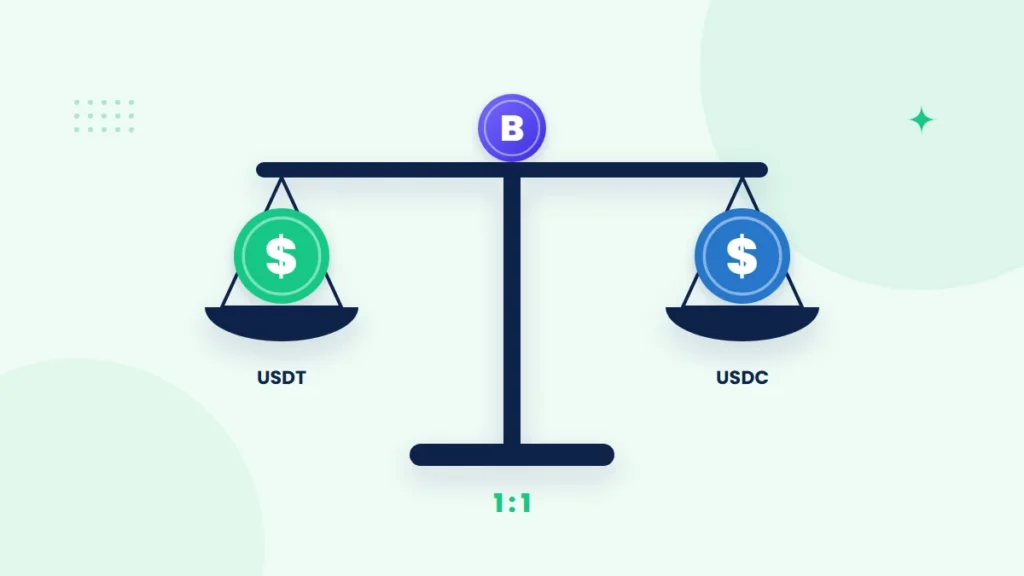
Stablecoins are cryptocurrencies designed to hold a steady value, usually one US dollar, while moving at the speed of a blockchain. They have become the backbone of crypto trading and decentralized finance, giving traders a place to park funds without leaving the crypto ecosystem. This guide explains how the three best-known stablecoins, USDT, USDC and DAI, actually maintain their value and what risks each one carries.
What Is a Stablecoin?
A stablecoin is a token that aims to track the value of a reference asset, most often the US dollar. One unit is designed to be worth roughly one dollar at all times. The ethereum.org stablecoins overview is a useful primer.
Most cryptocurrencies, such as Bitcoin and Ether, can swing significantly in value. Stablecoins solve a practical problem: they let you hold a dollar-like asset on a blockchain, send it anywhere in minutes and use it across exchanges and DeFi apps. They also play a central role when you buy, sell and trade Bitcoin and altcoins.
Why Traders Use Stablecoins
- Trading pairs: many crypto markets are quoted against stablecoins, such as BTC/USDT or ETH/USDC.
- Parking profits: traders can move out of volatile assets without cashing out to a bank.
- Fast transfers: stablecoins can move between platforms and wallets around the clock.
- DeFi activity: they are widely used for lending, borrowing and liquidity provision in decentralized finance.
- Cross-border payments: they offer a way to send dollar value internationally.
The Main Types of Stablecoins
Not all stablecoins keep their peg the same way. The mechanism behind a stablecoin determines most of its strengths and risks.
Fiat-Backed Stablecoins
These are issued by a company that holds reserves, such as cash and short-term government securities, intended to match the tokens in circulation. Users can, in principle, redeem tokens with the issuer for dollars, which helps keep the price near $1. USDT and USDC fall into this category.
Crypto-Collateralized Stablecoins
These are backed by other crypto assets locked in smart contracts. Because crypto is volatile, they are usually overcollateralized, meaning more value is locked up than the stablecoins issued. DAI is the best-known example.
Algorithmic Stablecoins
These attempt to maintain their peg mainly through code and market incentives rather than full reserves. Several high-profile algorithmic stablecoins have collapsed under pressure, which is why many traders treat this category with extra caution.
How USDT, USDC and DAI Work
USDT (Tether)
USDT is issued by Tether and is one of the most widely traded stablecoins in the market. Tether states that each token is backed by reserves, which have included cash, cash equivalents such as US Treasury bills and other assets.
- Available on multiple blockchains, including Ethereum and Tron, among others.
- Extremely deep liquidity across many exchanges and trading pairs.
- Has faced longstanding questions about the transparency and composition of its reserves. Tether publishes periodic reserve reports.
USDC (USD Coin)
USDC is issued by Circle. Its reserves are held in cash and short-term US Treasury instruments, and Circle publishes regular reports on those reserves, reviewed by an independent accounting firm.
- Known for its focus on regulatory compliance and reserve transparency.
- Widely used in DeFi and supported on many blockchains.
- Not immune to stress: in 2023, USDC briefly traded below its peg when part of its reserves was held at a US bank that failed, before recovering once the funds were secured.
DAI
DAI was created by the MakerDAO protocol, which is now part of the broader Sky ecosystem. Unlike USDT and USDC, DAI is not issued by a single company holding bank deposits.
- Users generate DAI by locking collateral in smart contracts called vaults.
- Vaults must stay overcollateralized. If collateral value falls too far, it can be liquidated automatically to protect the system.
- Collateral has expanded over time from crypto assets to include other stablecoins and tokenized real-world assets.
- Protocol settings, such as fees and collateral types, are managed through decentralized governance.
| Feature | USDT | USDC | DAI |
|---|---|---|---|
| Issuer | Tether (company) | Circle (company) | Decentralized protocol |
| Backing | Reserves of cash, Treasuries and other assets | Cash and short-term US Treasuries | Overcollateralized crypto and other assets |
| Peg mechanism | Redemption with issuer | Redemption with issuer | Collateral, liquidations and incentives |
| Main risk | Reserve transparency and counterparty risk | Banking and counterparty risk | Smart contract and collateral risk |
Risks of Holding Stablecoins
“Stable” does not mean “risk-free.” Before relying on any stablecoin, understand the main risks:
- Depeg risk: a stablecoin can trade below $1 during periods of stress or loss of confidence.
- Counterparty risk: fiat-backed coins depend on the issuer and the banks or custodians holding reserves.
- Smart contract risk: crypto-backed coins rely on code that could contain vulnerabilities.
- Freezing: centralized issuers can freeze tokens at specific addresses, for example in response to legal orders.
- Regulatory change: new rules can affect how stablecoins are issued, listed or used in different countries.
- No deposit insurance: stablecoin holdings are generally not protected the way bank deposits may be.
Diversifying across more than one stablecoin can reduce your exposure to a single issuer or mechanism failing.
Stablecoins are designed to be less volatile than other crypto assets, but the wider market remains highly volatile. Nothing in this article is financial advice.
How to Use Stablecoins Wisely
- Know which network you are using. The same stablecoin can exist on several blockchains, such as Ethereum and Solana, and sending to the wrong network can result in lost funds.
- Check liquidity. Stick to widely supported stablecoins with deep markets, especially for larger amounts.
- Understand the backing. Read the issuer’s or protocol’s reserve and collateral information.
- Do not chase unusually high yields. Very high returns on stablecoins often signal hidden risk.
- Secure your holdings. Apply the same account and wallet security you would use for any crypto.
On the Bithoex.com crypto exchange, stablecoins can serve as a convenient base currency for moving between assets. To learn how stablecoins fit into the broader ecosystem, visit our DeFi and Web3 section, or explore our crypto trading guides.
Frequently Asked Questions
Are stablecoins always worth exactly $1?
No. They are designed to stay close to $1, but market prices can drift slightly above or below. During periods of stress, some stablecoins have temporarily lost their peg by a larger margin.
Which is safer: USDT, USDC or DAI?
Each has a different risk profile. USDT and USDC depend on their issuers and reserves, while DAI depends on smart contracts and collateral. Many traders spread holdings across more than one to diversify these risks.
Can I earn interest on stablecoins?
Some platforms and DeFi protocols offer yield on stablecoins. These returns come with risks, including platform failure, smart contract bugs and liquidity issues, so research carefully before depositing.
Final Thoughts
Stablecoins bring the familiarity of the dollar to the speed and flexibility of blockchains. USDT offers deep liquidity, USDC emphasizes transparency and DAI offers a decentralized alternative. Understanding how each one works will help Bithoex.com users choose the right stablecoin for their needs and manage the risks that come with it.