Few events in crypto get as much attention as the Bitcoin halving. Roughly every four years, the reward miners earn for securing the network is cut in half, slowing the rate at which new bitcoin enters circulation. Here’s what the halving is, why it exists and what it can mean for traders.
What Is the Bitcoin Halving?
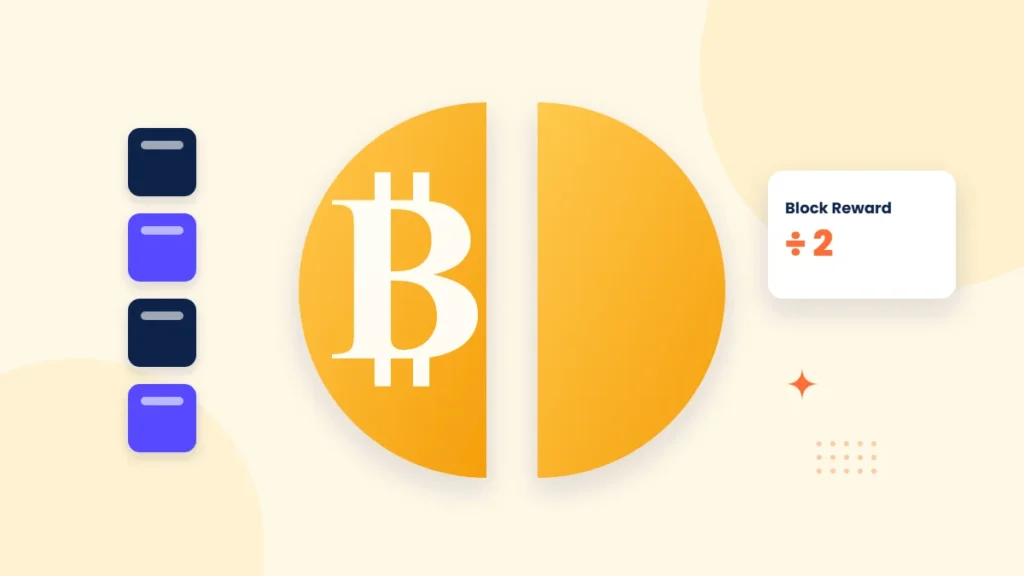
The Bitcoin halving is a built-in event in Bitcoin’s code that reduces the block subsidy, the number of new bitcoins miners receive for adding a block to the blockchain, by 50%.
It happens every 210,000 blocks, as described in the Bitcoin developer guide. Because a new block is mined about every 10 minutes on average, that works out to roughly once every four years. No company or committee decides when it happens. The schedule was set by Bitcoin’s creator, Satoshi Nakamoto, and is enforced by every node running the software.
A Quick History of Block Rewards
- 2009 launch: 50 BTC per block
- 2012 halving: 25 BTC per block
- 2016 halving: 12.5 BTC per block
- 2020 halving: 6.25 BTC per block
- 2024 halving: 3.125 BTC per block
- Next halving (expected around 2028): 1.5625 BTC per block
Since block times vary slightly, the exact date of each halving can only be estimated in advance. The block height, however, is fixed.
Why Does Bitcoin Have Halvings?
Halvings exist to control Bitcoin’s supply. Bitcoin has a hard cap of 21 million coins, and the halving schedule is the mechanism that gradually approaches that limit.
This design has a few important effects:
- Predictable issuance: Anyone can calculate how many bitcoins will exist at any future block.
- Declining inflation: Each halving cuts the rate of new supply, making Bitcoin’s issuance increasingly scarce over time.
- Digital scarcity: This fixed, transparent supply is a big reason many people compare Bitcoin to gold.
The final fraction of a bitcoin is expected to be mined around the year 2140. After that, miners will rely entirely on transaction fees.
How the Halving Affects Miners
Miners are the businesses and individuals who use specialized hardware to secure Bitcoin. Their revenue comes from two sources: the block subsidy and transaction fees.
When the subsidy is cut in half overnight, a large part of their income disappears unless the price of bitcoin or transaction fees make up the difference. As a result:
- Less efficient miners may shut down if their costs exceed their revenue.
- Hash rate can dip temporarily before the network’s difficulty adjustment rebalances block times.
- Miners may sell reserves to cover costs, which can add short-term selling pressure.
- Transaction fees become more important to the long-term security model.
Over time, the industry tends to consolidate around operators with cheaper energy and newer, more efficient machines.
What the Halving Means for Traders
The core argument is simple: if demand stays steady or grows while new supply shrinks, upward pressure on price can follow. That’s why halvings are often linked to Bitcoin’s broader market cycles.
However, traders should be careful about treating the halving as a guaranteed signal.
Why the Picture Is More Complicated
- It’s no secret: The halving schedule is public years in advance, so markets may “price in” expectations early.
- Small sample size: There have only been a handful of halvings, which is not enough data to prove a reliable pattern.
- Macro factors matter: Interest rates, liquidity, regulation and institutional flows can outweigh supply changes.
- Timing varies: Past post-halving rallies, where they happened, did not arrive on a neat, predictable schedule.
Past performance does not guarantee future results. Crypto is volatile, and this content is for education only, not financial advice.
Common Trading Behaviors Around Halvings
- “Buy the rumor, sell the news”: Some traders buy in the months before a halving and take profits around the event itself.
- Increased volatility: Media attention often brings new participants and sharper price swings.
- Long-term accumulation: Some investors use dollar-cost averaging through the cycle instead of trying to time it.
Common Halving Myths, Debunked
Because the halving gets so much hype, a few misconceptions circulate every cycle. Clearing them up will help you make calmer, better-informed decisions.
- Myth: Your bitcoin gets cut in half. The halving only affects new coins issued to miners. The bitcoin already in your wallet or exchange account is completely unaffected.
- Myth: Transactions stop during the halving. The network keeps running normally. The very next block simply pays a smaller subsidy.
- Myth: The halving can be canceled or delayed. Changing the schedule would require the vast majority of the network to adopt different software, which is extremely unlikely given how central the 21 million cap is to Bitcoin’s value proposition.
- Myth: Every halving creates an instant price spike. Historically, any market reaction has unfolded over months, not minutes, and it has varied widely from cycle to cycle.
Understanding these basics also helps you spot misleading social media posts and scams that use halving excitement to push “can’t-miss” opportunities. If you plan to buy, follow these steps to buy Bitcoin safely.
How to Prepare for the Next Halving
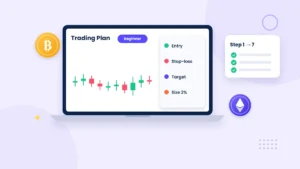
Rather than betting everything on a single event, build a plan that holds up whether the market rallies, stalls or drops. Our guide on how to buy, sell and trade Bitcoin and altcoins covers the practical side.
- Define your time horizon. Are you trading short-term volatility or investing for the long run?
- Set clear entry and exit rules. Decide in advance where you’ll take profits and where you’ll cut losses.
- Size positions responsibly. Never risk more than you can afford to lose on a single thesis.
- Watch on-chain and market data. Hash rate, miner flows, fees and trading volume can offer useful context.
- Avoid hype-driven decisions. Be wary of anyone promising guaranteed post-halving gains.
Following trusted market analysis can help you separate meaningful signals from noise as the next halving approaches.
When you’re ready to act on your plan, a platform like Bithoex.com lets you buy, sell and trade Bitcoin securely and easily, so you can execute your strategy without unnecessary friction.
Frequently Asked Questions
When is the next Bitcoin halving?
The next halving is expected around 2028, when the block reward drops from 3.125 BTC to 1.5625 BTC. The exact date depends on how quickly blocks are mined, but it will happen at a fixed block height.
Does the halving always make Bitcoin’s price go up?
No. While previous halvings have often been discussed alongside bull markets, many other factors influence price. There is no guarantee that any future halving will lead to higher prices.
What happens when all 21 million bitcoins are mined?
Once the final bitcoin is mined, expected around 2140, miners will no longer receive a block subsidy. They will earn income solely from transaction fees paid by users.
Final Thoughts
The Bitcoin halving is one of the most important features of Bitcoin’s design, enforcing a predictable and shrinking supply. For traders, it’s a valuable piece of context, not a crystal ball. Bithoex.com users who pair halving awareness with sound risk management will be better positioned for whatever comes next. Explore more guides in our Bitcoin section.