Crypto comes with its own vocabulary, and the jargon can feel overwhelming when you are just starting out. Knowing what the key terms mean will help you read charts, follow market news and avoid costly misunderstandings. This glossary covers 40 essential crypto terms, grouped by topic and explained in plain English. When you are ready to put them into practice, start with our complete guide to crypto trading for beginners.
Crypto and Market Basics
These foundational terms come up in almost every conversation about crypto markets.
- 1. Cryptocurrency: a digital asset that uses cryptography and a blockchain to record ownership and transfers without relying on a central authority.
- 2. Bitcoin (BTC): the first and largest cryptocurrency, created in 2009 as a peer-to-peer digital currency with a fixed maximum supply of 21 million coins.
- 3. Altcoin: any cryptocurrency other than Bitcoin. Ether, Solana and many smaller tokens are all considered altcoins.
- 4. Token: a digital asset built on top of an existing blockchain, often representing utility, governance rights or another asset. The term is often used loosely alongside “coin.”
- 5. Market capitalization: the total value of a cryptocurrency, calculated by multiplying its current price by its circulating supply.
- 6. Volatility: how much and how quickly an asset’s price moves. Crypto is known for high volatility, which creates both opportunity and risk.
- 7. Bull market: a period of generally rising prices and positive sentiment.
- 8. Bear market: a period of generally falling prices and negative sentiment.
Trading and Order Terms
These terms describe how trades are placed and executed on an exchange.
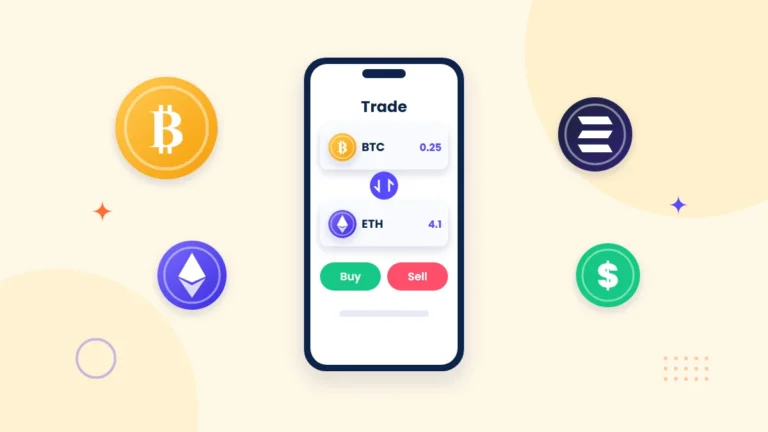
- 9. Exchange: a platform where you can buy, sell and trade cryptocurrencies. Centralized exchanges like Bithoex.com manage accounts and order matching for users.
- 10. Trading pair: two assets that can be traded against each other, such as BTC/USDT. The first is the base asset and the second is the quote asset.
- 11. Order book: a live list of buy orders (bids) and sell orders (asks) for a trading pair, organized by price.
- 12. Market order: an order to buy or sell immediately at the best available price.
- 13. Limit order: an order to buy or sell only at a specific price or better. It may not fill if the market never reaches your price.
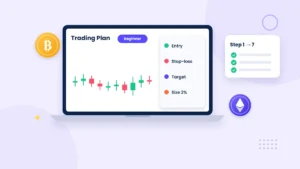
- 14. Stop-loss order: an order that triggers a sale when the price falls to a set level, helping limit potential losses.
- 15. Spread: the difference between the highest bid and the lowest ask. Tighter spreads usually indicate a more liquid market.
- 16. Liquidity: how easily an asset can be bought or sold without significantly moving its price.
- 17. Slippage: the difference between the price you expect and the price you actually get, common in fast or thin markets.
- 18. Leverage: borrowing funds to increase the size of a position. It magnifies both gains and losses and is most common in futures, as explained in our spot vs futures trading guide.
- 19. Liquidation: the forced closing of a leveraged position when losses reach a level the collateral can no longer cover.
- 20. Dollar-cost averaging (DCA): investing a fixed amount at regular intervals regardless of price, which smooths out your average entry price over time.
Leverage and liquidation deserve special respect. Crypto is volatile, and leveraged positions can be wiped out quickly. This glossary is educational, not financial advice.
Charting and Analysis Terms
- 21. Candlestick: a chart element showing an asset’s open, high, low and close prices for a given period. Learn more in our guide on how to read candlestick charts.
- 22. Support: a price level where buying interest has historically been strong enough to stop a decline.
- 23. Resistance: a price level where selling pressure has historically stopped price from rising further.
- 24. Technical analysis (TA): studying price charts, patterns and indicators to identify possible future price movements.
- 25. Fundamental analysis (FA): evaluating a project’s technology, team, adoption, tokenomics and other factors to judge its long-term value.
- 26. FOMO: “fear of missing out,” the urge to buy after a sharp rally because others seem to be profiting.
- 27. FUD: “fear, uncertainty and doubt,” negative information or sentiment that can trigger selling, whether or not it is accurate.
For practical chart-reading tips, browse our market analysis articles.
Wallets and Security Terms
- 28. Wallet: software or hardware that stores the keys needed to access and send your crypto.
- 29. Private key: a secret code that proves ownership of crypto at a specific address. Anyone who has it can move the funds.
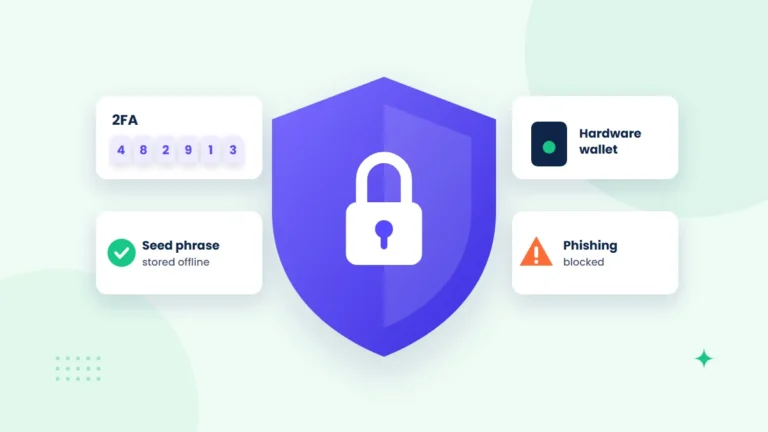
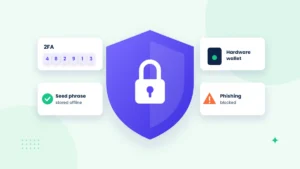
- 30. Seed phrase: a list of 12 or 24 words that can restore a wallet and all its keys. Never share it with anyone, and store it offline.
- 31. Hot wallet vs. cold wallet: a hot wallet is connected to the internet for convenience, while a cold wallet, such as a hardware wallet, stays offline for stronger security.
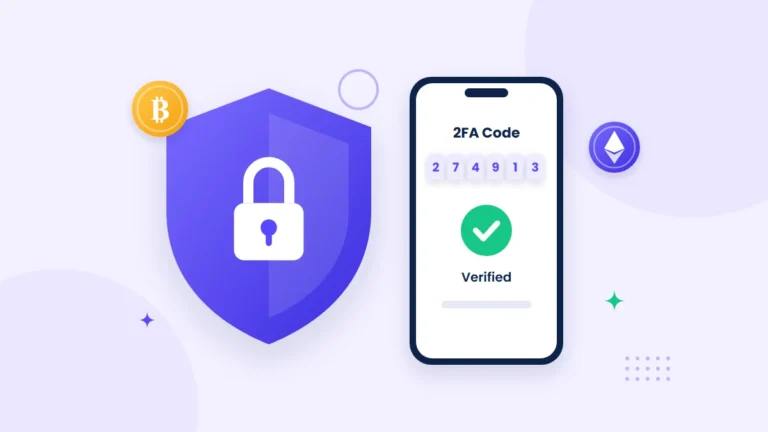
- 32. Two-factor authentication (2FA): a second verification step, such as a code from an authenticator app, that protects your account even if your password is stolen.
- 33. Phishing: a scam that uses fake websites, emails or messages to trick you into revealing passwords, codes or seed phrases.
Blockchain and DeFi Terms
- 34. Blockchain: a shared, tamper-resistant digital ledger that records transactions in linked blocks across many computers.
- 35. Gas fee: the fee paid to process a transaction or run a smart contract on a blockchain such as Ethereum.
- 36. Halving: a scheduled event, roughly every four years, that cuts the reward Bitcoin miners receive for new blocks in half, slowing the rate of new supply.
- 37. Smart contract: self-executing code on a blockchain that runs automatically when predefined conditions are met.
- 38. DeFi: short for decentralized finance, a set of blockchain-based apps for lending, borrowing and trading without traditional intermediaries.
- 39. Stablecoin: a cryptocurrency designed to hold a steady value, usually pegged to the US dollar, such as USDT, USDC or DAI.
- 40. Staking: locking up tokens to help secure a proof-of-stake blockchain, typically in exchange for rewards.
Bonus: How to Keep Learning
- Bookmark this page and revisit it whenever you meet an unfamiliar term.
- Read news and analysis slowly at first, looking up anything you do not understand.
- Practice with small amounts so new concepts connect to real experience.
- Explore our blog for beginner-friendly guides on each topic.
Understanding the language of crypto is the first step toward making informed, confident decisions.
Frequently Asked Questions
What is the difference between a coin and a token?
A coin usually runs on its own blockchain, like Bitcoin or Ether, while a token is built on top of an existing blockchain using smart contracts. In everyday conversation, the two words are often used interchangeably.
Which terms should beginners learn first?
Start with the basics: wallet, seed phrase, exchange, market order, limit order and volatility. These cover how you store crypto, how you trade it and the main risk you will face.
Why is my seed phrase so important?
Your seed phrase can restore your entire wallet. If someone else gets it, they can take your funds, and if you lose it, you may lose access forever. Keep it offline and never enter it on a website.
Final Thoughts
Every expert trader was once a beginner puzzling over terms like slippage and liquidation. By learning these 40 essentials, you will be able to follow market discussions, understand your trading tools and spot risks more easily. Keep this glossary handy as you continue your journey with Bithoex.com.