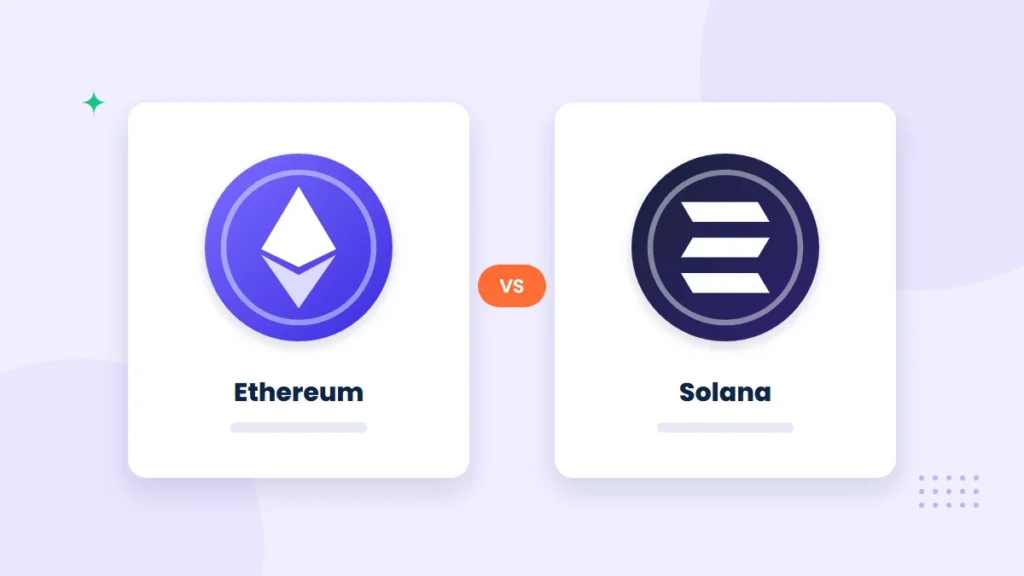
Ethereum and Solana are two of the most widely used smart contract platforms in crypto, each powering thousands of apps, tokens and DeFi protocols. They share a goal of building a decentralized internet, but they take very different paths to get there. This guide compares how they work, where each one shines and what traders should keep in mind.
What Is a Smart Contract Platform?
A smart contract is a program stored on a blockchain that runs automatically when certain conditions are met. Smart contract platforms let developers build decentralized applications, or dApps, without relying on a central company to operate them.
These platforms power a huge range of activity, including:
- Decentralized exchanges and lending protocols
- Stablecoins and tokenized assets
- NFTs, gaming and digital collectibles
- DAOs and on-chain governance
Ethereum and Solana both aim to be the foundation for this ecosystem, but they make different trade-offs between speed, cost, security and decentralization.
Ethereum: The Original Smart Contract Leader
Ethereum launched in 2015 and introduced programmable smart contracts to the mainstream. You can read ethereum.org’s introduction to Ethereum for the project’s own overview. It remains the largest smart contract ecosystem by many measures, including developer activity and total value locked in DeFi.
How Ethereum Works
- Proof of Stake: Since “The Merge” in 2022, Ethereum has been secured by validators who stake ETH instead of miners using energy-intensive hardware.
- The EVM: The Ethereum Virtual Machine runs smart contracts, usually written in Solidity. Many other blockchains are EVM-compatible, which extends Ethereum’s influence.
- Layer-2 scaling: Rollups process transactions off the main chain and post data back to Ethereum, lowering fees while inheriting its security.
Ethereum’s Strengths
- A long track record and battle-tested security
- Deep liquidity and a mature DeFi ecosystem
- A large, diverse validator set and multiple client implementations
- Strong developer tooling and community support
Ethereum’s Challenges
- Fees on the main network can rise sharply during busy periods
- The layer-2 landscape can feel fragmented for new users
- Base-layer transactions are slower than on high-throughput chains
Solana: Built for Speed and Scale
Solana launched its mainnet beta in 2020 with a focus on high performance. Instead of relying heavily on separate scaling layers, Solana is designed to process a high volume of transactions directly on its main chain.
How Solana Works
- Proof of History plus Proof of Stake: Proof of History creates a verifiable timeline of events, helping validators agree on transaction order quickly. Proof of Stake secures the network.
- Parallel execution: Solana’s runtime can process many non-conflicting transactions at the same time.
- Rust-based programs: Developers typically write Solana programs in Rust, often using frameworks that simplify development.
Solana’s Strengths
- Very fast block times and quick confirmations
- Typically very low transaction fees
- A single, unified chain that avoids much of the fragmentation of multiple layers
- Rapid growth in consumer apps, payments and trading activity
Solana’s Challenges
- The network experienced several notable outages in its earlier years
- Running a validator requires powerful hardware, which raises decentralization concerns for some critics
- A shorter track record than Ethereum
Solana’s developers have worked to improve reliability over time, including efforts to add independent validator clients that reduce dependence on a single codebase.
Ethereum vs Solana: Head-to-Head
Here’s a simplified comparison of the two networks:
| Category | Ethereum | Solana |
|---|---|---|
| Launched | 2015 | 2020 (mainnet beta) |
| Consensus | Proof of Stake | Proof of Stake with Proof of History |
| Scaling approach | Layer-2 rollups | High-throughput single chain |
| Typical fees | Higher on main chain, lower on layer 2s | Generally very low |
| Main languages | Solidity, Vyper | Rust |
| Key strength | Security, maturity, liquidity | Speed, low cost, user experience |
| Key concern | Cost and fragmentation | Reliability history, hardware demands |
User Experience: How Each Chain Feels in Practice
Specs on paper only tell part of the story. Day-to-day experience can differ quite a bit between the two networks.
Using Ethereum
- Wallets: Popular browser and mobile wallets support Ethereum and most EVM-compatible networks.
- Choosing a network: Users often need to decide whether to transact on the main chain or a layer 2, and may need to bridge funds between them.
- Gas fees: Fees are paid in ETH and fluctuate with demand, so timing can affect costs.
Using Solana
- Wallets: Solana has its own dedicated wallets, and some multi-chain wallets support it as well.
- Speed: Transactions usually confirm in seconds or less, which suits frequent trading and payments.
- Low costs: Small fees make it practical to interact with apps often, though priority fees can rise during congestion.
Whichever chain you use, always double-check that you’re sending tokens on the correct network. Sending assets to an incompatible address or chain is one of the most common ways people lose funds.
What This Means for Traders and Investors
Neither network is objectively “better.” They serve different needs, and their tokens, ETH and SOL, often react to different catalysts.
Factors Worth Watching
- Network activity: Rising transactions, active addresses and fees can signal growing demand.
- Developer growth: A healthy builder community tends to drive long-term innovation.
- Ecosystem flows: Stablecoin supply and DeFi value locked show where capital is moving.
- Upgrades and roadmaps: Major technical changes can shift sentiment for either chain.
- Token economics: Staking yields, issuance and fee-burning mechanisms all affect supply.
Some investors hold both, viewing Ethereum as the established settlement layer and Solana as a high-performance challenger. Others focus on one based on their altcoin research and risk tolerance. Our guide on how to buy, sell and trade Bitcoin and altcoins explains the practical steps either way.
Altcoins can be even more volatile than Bitcoin. This comparison is for educational purposes and is not financial advice.
If you decide to add ETH or SOL to your portfolio, the Bithoex.com crypto trading platform aims to make buying, selling and trading crypto secure and simple. Always confirm which assets are supported before you trade. To dig deeper into how these chains power decentralized finance, explore our DeFi and Web3 guides.
Frequently Asked Questions
Is Solana faster than Ethereum?
On its base layer, Solana generally processes transactions faster and at lower cost than Ethereum’s main chain. However, Ethereum’s layer-2 networks also offer fast, low-cost transactions while relying on Ethereum for security.
Can Solana replace Ethereum?
It’s unlikely to be a winner-takes-all situation. Both networks have strong communities and distinct strengths, and many experts expect multiple smart contract platforms to coexist.
Which is better for beginners, ETH or SOL?
That depends on your goals. Ethereum offers a longer track record and a deep ecosystem, while Solana offers fast, inexpensive transactions. Research both, start small and never invest more than you can afford to lose.
Final Thoughts
Ethereum and Solana represent two compelling visions for smart contract platforms: one prioritizing security and a layered scaling roadmap, the other prioritizing speed and a unified chain. Understanding their trade-offs helps Bithoex.com users and every other trader make more informed decisions. For more coin comparisons and research tips, visit our altcoins section.