Bitcoin opened the door to digital money, and thousands of altcoins have followed it. If you want to buy, sell and trade Bitcoin and other cryptocurrencies with confidence, you need more than a sign-up button. This complete guide walks you through how these assets work and what to do at every step, from your first purchase to managing a growing portfolio.
In this guide:
- What Bitcoin is, why it matters and how its fixed supply works
- What altcoins are and the main categories worth knowing
- How to research a coin before you put money in
- Step-by-step instructions to buy, sell and trade between assets
- Why stablecoins make a useful trading base
- How to store your crypto after you buy
- A side-by-side comparison table, a beginner checklist and an FAQ
Risk reminder: Cryptocurrencies are highly volatile and you can lose money. This guide is educational and is not financial advice.
What Bitcoin Is and Why It Matters
Bitcoin is a decentralized digital currency that lets people send value directly to each other over the internet without a bank in the middle. It was introduced in 2008 by the pseudonymous Satoshi Nakamoto in a nine-page paper titled “Bitcoin: A Peer-to-Peer Electronic Cash System”. The network went live in January 2009 and has run continuously ever since.
The problem Bitcoin solved
Before Bitcoin, digital money had a “double-spending” problem: a digital file can be copied, so what stops someone from spending the same coin twice? Banks and payment processors solved this by keeping a central ledger. The whitepaper proposed a different solution, a public ledger maintained by a network of computers that agree on the order of transactions.
How the network stays honest
Bitcoin uses proof of work. Miners compete to bundle transactions into blocks by solving a computationally expensive puzzle, and the winner adds the next block to the chain. Each block references the one before it, which is why it is called a blockchain.
- Transparency: anyone can inspect the full transaction history.
- Security: rewriting history would require outspending the honest majority of mining power.
- Neutrality: no single company or government controls the protocol.
Why people value it
Bitcoin matters because it was the first working example of scarce digital property that no one can counterfeit or confiscate by decree. Some people use it as a long-term store of value, others as a way to move money across borders, and many simply treat it as the benchmark asset of the crypto market. You can explore more fundamentals in our Bitcoin articles.
Bitcoin’s fixed supply
One of Bitcoin’s defining features is its predictable monetary policy. The protocol caps the total supply at 21 million BTC, and new coins enter circulation only as block rewards paid to miners.
How the halving works: roughly every 210,000 blocks, which works out to about four years, the block reward is cut in half. This event is called the halving. It started at 50 BTC per block in 2009 and has been reduced several times since, slowing the rate at which new bitcoin is created.
- Blocks are produced about every 10 minutes on average.
- Mining difficulty adjusts automatically to keep that pace steady.
- The last fractions of a bitcoin are expected to be mined around the year 2140.
Why the halving matters to traders
Because the halving reduces new supply, it is a recurring talking point for investors and miners alike. That said, past market behavior around halvings is no guarantee of future results. For the full mechanics, history and common misconceptions, read Bitcoin halving explained.
What Altcoins Are and the Main Categories
“Altcoin” simply means any cryptocurrency other than Bitcoin. The term covers everything from major networks with large developer ecosystems to small experimental tokens. Understanding the main categories helps you know what you are actually buying.
Smart-contract platforms
These blockchains let developers deploy programs, called smart contracts, that run automatically when conditions are met. They power decentralized finance (DeFi), NFTs, games and many other applications. Ethereum is the best-known example, and Solana is another widely used platform.
Stablecoins
Stablecoins are tokens designed to hold a steady value, usually pegged one-to-one to the US dollar. They are backed by reserves or maintained by on-chain mechanisms, and traders use them heavily to move in and out of positions without leaving the crypto ecosystem.
Other common categories
- Payment coins: designed mainly for fast, low-cost transfers.
- Exchange and utility tokens: tied to a specific platform or service.
- Governance tokens: give holders a vote on protocol decisions.
- Layer-2 tokens: associated with networks that scale an underlying blockchain.
- Meme coins: driven mostly by community and hype, and typically the most volatile.
Browse our altcoin guides for deeper dives into individual sectors.
Ethereum vs Solana: two leading smart-contract platforms
Ethereum and Solana are often compared because both aim to be general-purpose platforms for decentralized applications. They take different approaches to the same problem.
Ethereum in brief:
- Launched in 2015 and pioneered programmable smart contracts at scale.
- Switched from proof of work to proof of stake in 2022, an upgrade known as The Merge.
- Relies on a growing ecosystem of layer-2 networks to increase throughput and lower fees.
Solana in brief:
- Launched its mainnet beta in 2020 with a focus on high speed and low transaction costs.
- Combines proof of stake with a timekeeping technique called proof of history, as described in Solana’s own documentation.
- Aims to scale on a single fast base layer rather than relying mainly on separate layer-2s.
Neither design is strictly “better.” Each makes trade-offs between decentralization, speed and complexity. Our full breakdown of Ethereum vs Solana compares fees, ecosystems and the risks of each.
How to Research an Altcoin Before You Buy
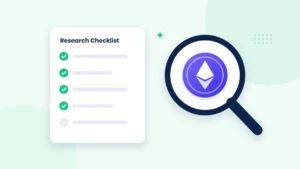
With thousands of tokens available, research is your best defense against hype and scams. A few disciplined checks go a long way.
Core questions to ask
- What problem does it solve? Read the project’s whitepaper or documentation and see if the use case is clear.
- Who is building it? Look for an identifiable team, active public code repositories and a track record.
- How does the token work? Check total supply, circulating supply, emission schedule and how much is held by insiders.
- Is there real usage? Look at on-chain activity, developer activity and genuine community engagement.
- How liquid is it? Thinly traded tokens can be hard to sell without moving the price.
Red flags
- Promises of guaranteed or unusually high returns
- Anonymous teams with no verifiable history combined with heavy marketing
- Large, unlocked insider allocations that could be sold at any time
- Pressure to “buy now before it’s too late”
For a complete framework, including worksheets and on-chain signals, see how to research an altcoin.
Step by Step: How to Buy Crypto
Buying your first crypto is straightforward once you understand the flow. Here is the general process on most reputable platforms, including when you buy, sell and trade crypto on Bithoex.com.
The buying process
- Create an account using a unique email and a strong, unique password.
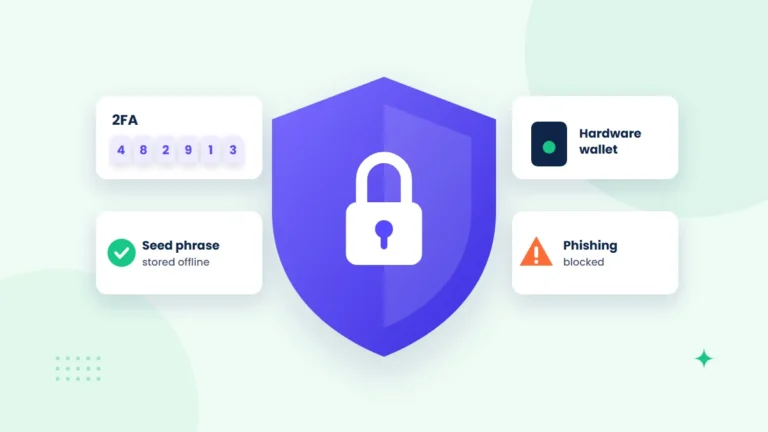
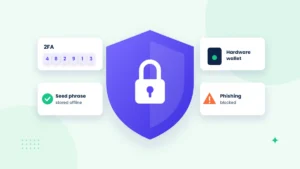
- Turn on two-factor authentication (2FA), ideally with an authenticator app rather than SMS.
- Complete identity verification if the platform requires it.
- Fund your account using one of the deposit methods offered.
- Choose your asset and order type. A market order buys at the current price; a limit order buys only at your chosen price or better.
- Review and confirm the amount, price and any fees shown before submitting.
Smart habits for new buyers
- Start with a small amount while you learn the interface.
- Consider dollar-cost averaging, buying a fixed amount on a regular schedule, to reduce timing risk.
- Always double-check URLs and never share your login codes.
Our detailed walkthrough on how to buy Bitcoin safely covers phishing, account security and common first-time mistakes.
How to Sell Crypto and Take Profit
Knowing when and how to sell is just as important as knowing what to buy. Many people focus on entries and forget to plan their exits.
Plan your exit in advance
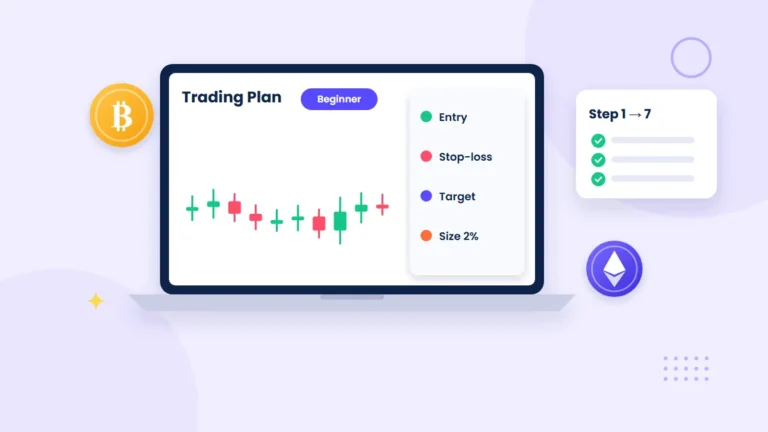
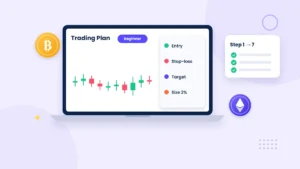
- Set targets: decide ahead of time at what price, or what percentage gain, you will take some profit.
- Scale out: selling in portions lets you lock in gains while keeping some exposure.
- Define your downside: know the loss you are willing to accept before you enter a trade.
Using limit and stop orders
Order types let you automate your plan so emotions do not make the decision for you.
- Limit sell order: sells only at your target price or higher.
- Stop-loss order: triggers a sale if the price falls to a level you set, helping limit losses.
- Stop-limit order: once a stop price is hit, places a limit order instead of a market order, giving you price control but no guarantee of execution.
In fast markets, a stop order may fill at a worse price than expected, which is known as slippage.
Keep good records for taxes
In many countries, selling crypto, swapping one coin for another or spending it can be a taxable event. Rules vary widely, so check with a qualified tax professional in your jurisdiction.
- Record the date, amount, price and fees for every buy, sell and swap.
- Export your transaction history regularly rather than waiting until tax season.
- Track transfers between your own wallets so they are not mistaken for sales.
How to Trade Between Assets
Once you hold some crypto, you may want to move between assets, for example from Bitcoin into Ethereum or into a stablecoin. This is where trading pairs come in.
Understanding trading pairs
A trading pair shows two assets and the price of one in terms of the other. In the pair BTC/USDT, BTC is the base asset and USDT is the quote asset. The price tells you how many units of the quote asset one unit of the base asset costs.
- Buying BTC/USDT means spending USDT to get BTC.
- Selling BTC/USDT means giving up BTC to receive USDT.
- Crypto-to-crypto pairs, such as ETH/BTC, let you swap directly without touching fiat.
Spot vs futures in summary
Spot trading means buying or selling the actual asset for immediate settlement; you own what you buy. Futures trading involves contracts that track an asset’s price, often with leverage, letting traders profit from rising or falling prices without holding the coin.
- Spot is simpler and your maximum loss is what you put in.
- Futures with leverage magnify both gains and losses and can lead to liquidation.
- Most beginners are better served by mastering spot trading first.
Learn the details, including margin and funding rates, in spot vs futures trading. If you are completely new, our crypto trading for beginners guide covers charts, order books and building a routine.
Stablecoins as a trading base
Stablecoins have become the default “home base” for many traders. Instead of cashing out to a bank every time, you can park value in a dollar-pegged token and redeploy it quickly.
Why traders use them:
- Reduced volatility: lock in gains without leaving the crypto ecosystem.
- Speed: move between positions in seconds rather than waiting on bank transfers.
- Common quote currency: many of the most liquid trading pairs are quoted in stablecoins.
Stablecoin risks to know
Stablecoins are not risk-free. A stablecoin can lose its peg if its reserves are inadequate or its stabilizing mechanism fails, and issuers can face regulatory action. Different designs carry different trade-offs:
- Fiat-backed: backed by cash and short-term assets held by an issuer.
- Crypto-backed: overcollateralized with other cryptocurrencies.
- Algorithmic: rely on code and incentives, and have historically been the most fragile.
For a full comparison of how they work, read stablecoins explained.
Bitcoin vs Ethereum vs Solana vs Stablecoins at a Glance
This table summarizes well-established differences between the major asset types covered in this guide.
| Asset | Primary purpose | Consensus | Typical use |
|---|---|---|---|
| Bitcoin (BTC) | Decentralized digital money with a fixed 21 million supply | Proof of work | Long-term holding, store of value, peer-to-peer payments |
| Ethereum (ETH) | Programmable platform for smart contracts and decentralized apps | Proof of stake | DeFi, NFTs, paying network fees, staking |
| Solana (SOL) | High-throughput smart-contract platform | Proof of stake with proof of history | Fast, low-cost apps, trading, paying network fees, staking |
| Stablecoins (e.g., USDT, USDC) | Tokens designed to track a stable value, usually the US dollar | Depends on the blockchain they are issued on | Trading base, moving value, payments, parking profits |
Storing Your Crypto After You Buy
Where you keep your crypto matters as much as what you buy. The core principle is simple: whoever controls the private keys controls the funds.
If you are actively trading on Bithoex.com or any other exchange, it can make sense to keep a working balance there while moving long-term holdings to storage you control.
Your main storage options
- Custodial (on a platform): convenient for active trading, but you rely on the platform’s security.
- Software (hot) wallets: apps on your phone or computer that give you control of your keys while staying connected to the internet.
- Hardware (cold) wallets: physical devices that keep keys offline and are generally the safest option for long-term holdings.
Storage best practices
- Write your recovery phrase on paper or metal and store it offline in a secure place.
- Never type your recovery phrase into a website or share it with anyone, including “support” staff.
- Send a small test transaction before moving large amounts.
- Double-check the network and address every time you withdraw; crypto sent to the wrong address is usually unrecoverable.
Our crypto security guide goes deeper on wallets, 2FA, phishing and protecting your accounts.
Beginner Checklist
Use this checklist before and after your first trades.
- I understand that crypto is volatile and I am only investing money I can afford to lose.
- I have a strong, unique password and 2FA turned on.
- I have researched each asset I plan to buy, not just followed social media buzz.
- I know the difference between market, limit and stop orders.
- I have written down my profit targets and my maximum acceptable loss.
- I understand trading pairs and which asset I am spending versus receiving.
- I am sticking with spot trading until I fully understand leverage.
- I have a storage plan and my recovery phrase is backed up offline.
- I am recording every transaction for tax purposes.
- I review my portfolio on a schedule instead of reacting to every price swing.
Frequently Asked Questions
Do I need to buy a whole bitcoin?
No. Bitcoin is divisible to eight decimal places, and the smallest unit is called a satoshi. You can buy a small fraction of one BTC, which makes it accessible at almost any budget.
Is it better to buy Bitcoin or altcoins?
It depends on your goals and risk tolerance. Bitcoin is the most established crypto asset, while altcoins offer different features and often higher volatility. Many people start with Bitcoin and add altcoins only after researching them carefully.
What is the safest way to buy, sell and trade Bitcoin as a beginner?
Use a reputable platform, turn on 2FA, start small and stick to spot trading with clear limit and stop orders. Move long-term holdings to storage you control, and keep records of every transaction.
Why do traders use stablecoins instead of cashing out?
Stablecoins let traders lock in value and move between positions quickly without waiting on bank transfers. They still carry risks, such as losing their peg, so it is wise to understand how a specific stablecoin is backed.
Final Thoughts
Learning to buy, sell and trade Bitcoin and altcoins is a skill you build step by step. Understand what each asset is designed to do, research before you commit, plan your exits and protect your keys. Those habits matter far more than trying to time the market perfectly.
When you are ready to put this knowledge into practice, Bithoex.com is built to help you buy, sell and trade cryptocurrencies securely and easily. Start small, stay curious and keep coming back to this guide as your hub for the Bitcoin and altcoin topics that matter most.